
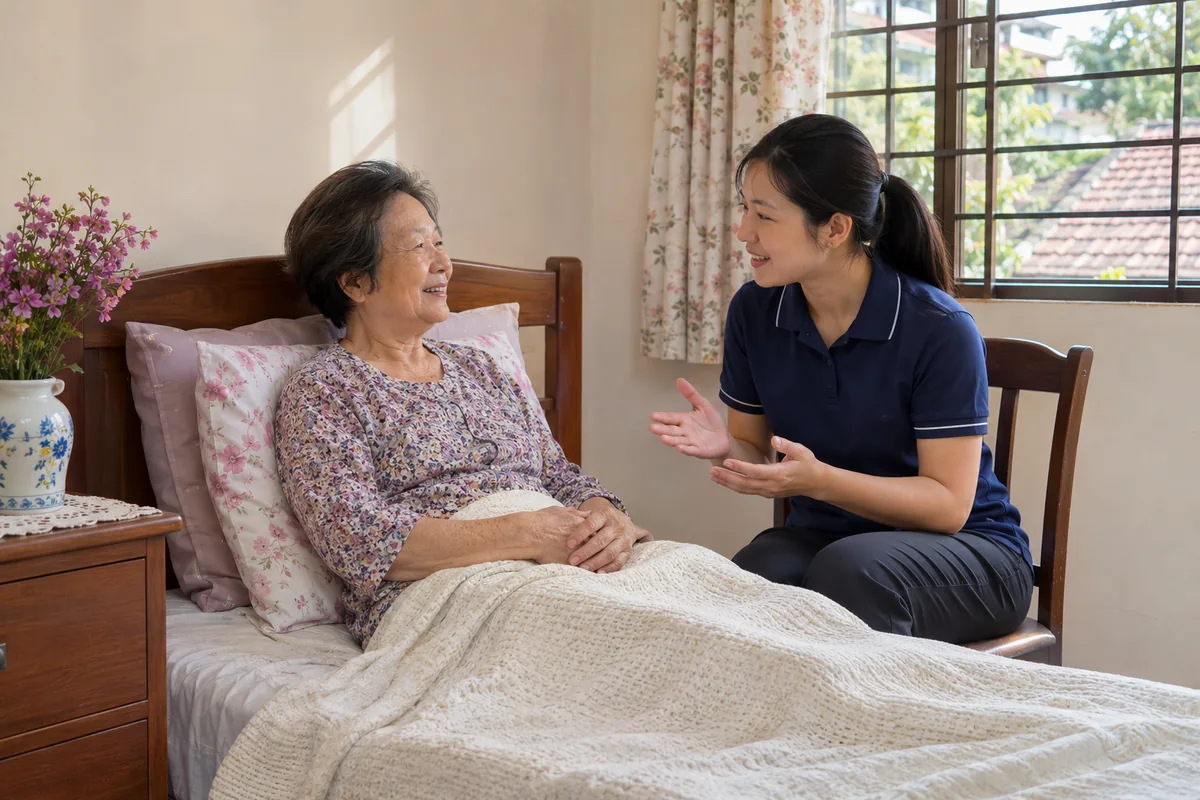
What does physiotherapy do for someone who stays in bed?
It keeps the body as healthy and as comfortable as possible, and it tries to move the person a step forward when they can. The main jobs are protecting joints, skin and breathing, keeping muscles active, and teaching the family safe handling.
Rest in bed is sometimes needed, but long stretches without movement cause problems of their own. Joints tighten, muscles waste, skin breaks down and the chest can become weak. Gentle, regular care helps prevent these.
Who is this for?
It is for people confined to bed after a stroke, a hip fracture, a long hospital stay, advanced illness, a spinal injury or frailty. It is also for the family members and helpers who care for them.
Perak has the highest share of residents aged 65 and over of any Malaysian state, at 10.8% in 2026 [1]. In Ipoh, that can mean a daughter or son in another city and a helper at home. Our guide for bedridden parents at home in Ipoh covers daily routine in more detail.
What do we check at the first visit?
We begin by listening to you and the person in bed. If your parent can speak, we ask what they notice. If not, we watch for signs of comfort and discomfort.
- Diagnosis, hospital notes, medicines and any instructions from the doctor.
- Skin, especially over the back of the pelvis, heels, hips and elbows.
- Joint movement and muscle tone in arms and legs.
- Breathing and ability to cough.
- Ability to roll, sit up or help with turning.
- The bed, mattress, pillows and the room layout.
We also check who does the daily care and how their back is coping.
How do we prevent stiffness and weak muscles?
We guide the joints through their full range every day, using gentle, slow movements. If your parent can join in, we make it active. If not, we move the limb for them and build up as they gain control.
Positioning matters as much as movement. We show you how to place pillows so that hips, knees and ankles rest in a good position. Our glossary explains contracture, the fixed tightening of a joint that this routine aims to prevent.
How do we protect the skin?
Pressure sores form where bone presses against the mattress for too long. Regular turning, good positioning and skin checks protect against them. Read our guide on preventing pressure sores at home and the glossary entry on pressure injury.
We show you how to turn your parent with a sheet and pillows, without dragging, and how to check the skin each day. If you see redness that does not fade or an open area, tell the doctor or nurse promptly.
How do we support breathing and the chest?
People who lie flat for long periods collect secretions in the chest, and cough less strongly. We teach positions that help drainage, breathing exercises your parent can manage and safe ways to sit more upright.
Chest care is simple but important. Tell the doctor promptly if your parent has fever, new cough, fast breathing or sudden drowsiness. Go to the emergency department for severe breathing difficulty.
Can we work towards sitting up and transfers?
Where the person is medically stable, yes. We use stages: rolling, lying on one side, getting to sit at the bed edge, then supported sitting and transfers to a chair. Each step has practice, rest and a safety check.
Sitting at the edge of the bed is a real milestone. It supports breathing, circulation and mood. For more on this stage, see bed mobility and transfer training, and our pages on stroke rehabilitation at home and older-adult rehabilitation.
How do we train the family and the helper?
We show, you try, we correct. Learning by doing in the real bedroom is quicker than watching a video. We cover turning, moving up the bed, gentle limb exercises and when to stop and call us.
We also care for the carer. Poor lifting habits cause back injuries in family members. See our guide on caregiver strain and back care and the one on training a helper.
Can you work with the doctor and nurse?
Yes. Bring discharge letters and any instructions. If we see something that needs medical review, we tell you and help you reach the right person.
Home physiotherapy across Ipoh is available now, and prices are quoted on WhatsApp. Our Canning Garden centre is opening soon, but a bedridden patient is usually best seen at home. Read more on home physiotherapy.