
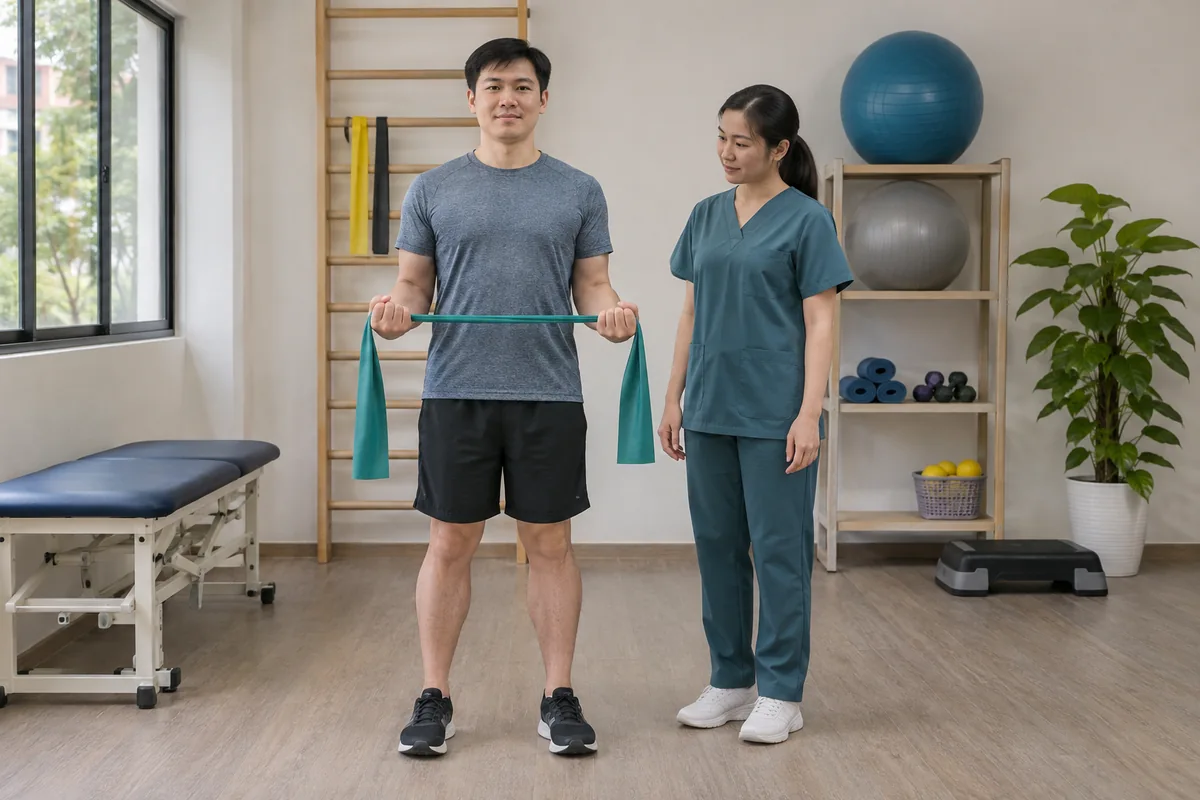
What is exercise rehabilitation?
Exercise rehabilitation is a planned programme of movement that rebuilds strength, flexibility, balance and stamina after pain, injury or a long break. It is the stage where treatment moves from “settling the problem” to “making the body ready for life again”.
A physiotherapist chooses the exercises, the number of repeats and the rest between them. Then they raise the difficulty step by step, so you are challenged without being pushed into a flare-up.
Who needs it?
Anyone who feels better but not yet back to normal. You may be pain-free at rest but nervous about carrying shopping, climbing the Bukit Kledang trail or lifting a grandchild.
It also helps people who stopped moving because of a long illness or a hospital stay and now feel weak. And it helps those who want to stay independent as they age, which is where the older adult rehabilitation page picks up.
The World Health Organization (WHO) lists exercise, weight management and education as management for osteoarthritis (wear and tear in the joint) [1]. Exercise is a pillar of care, not an extra.
What are the four stages?
Most plans move through four overlapping stages. We will tell you which one you are in.
- Calm and move. Gentle, pain-controlled movement to keep joints from stiffening.
- Rebuild control. Small, slow exercises that wake up the muscles that protect the joint.
- Build strength. Heavier or longer work, such as squats to a chair, step-ups and resistance bands.
- Return to your activity. Practice of the real task, whether that is a long walk, badminton or a day on your feet at the stall.
Stages overlap, and a setback can send you back one step without losing everything.
What does a session look like?
A session begins with a check of how you are since last time: pain, sleep, what you managed and what you avoided. We watch a few key movements, such as getting up from a chair, stepping up, balancing on one leg or reaching overhead.
We then adjust the exercises, show the changes and watch you do them, so the form is right before you do them alone. You leave with a short written or messaged routine.
Can I train at home in Ipoh’s heat?
Yes, and a few small habits help. Exercise in the cooler early morning or evening, keep water close and wear light cotton clothes. A fan in the room is better than closed windows and an air-conditioner turned to its lowest setting.
Your home already has useful equipment: a sturdy dining chair, the bottom stair, a kitchen counter for balance and a towel. For walking, a gentle loop around D.R. Seenivasagam Park or your own neighbourhood works well if your plan allows it.
Our guide on fitting home exercises into your day shows how to make it a habit.
Why does exercise matter so much for older adults?
Because it is one of the few things shown to reduce falls. A Cochrane review found that exercise reduced the rate of falls in older people living in the community by 23% [2].
Strength in the legs and good balance protect independence long after the original problem is forgotten. This is why we build every older adult plan around standing, stepping and sit-to-stand work. See balance and falls in older adults.
When is exercise not the right next step?
Sometimes the next step is a doctor, not more exercise. If a joint is hot, red and swollen, if you have a fever, or if pain is getting worse day by day despite rest, see your doctor first.
Seek urgent care for chest pain, severe breathlessness or fainting during exercise. Tell us about any heart or blood pressure condition before we begin.
How do I start, and how is it priced?
Message us on WhatsApp with what you want to do again, what hurts and what you have tried. We suggest a start: a home visit across Ipoh now, or our Canning Garden centre once it opens.
Home and centre prices differ, and a quote comes after you describe the situation. See also rehab to exercise for how to move from treatment to training.